
Link to the video here!
SIOUX CITY (KTIV) – There is a lot that goes on in any medical clinic. The CNOS Orthopaedic Urgent Care is no different.
We joined in on “a day in the life” of CNOS Certified Physician Assistants.Tyson Allen has a full morning seeing patients, including a check-up on Linda Bowden, who sprained her wrist after a fall in August.
Bowden explained her injury, “I tripped and broke my fall with my left wrist. Didn’t feel very good. I thought it was probably just muscular, but my husband insisted that I come in the next day.” That was her first visit to CNOS, where she was given a cast and how to handle her wrist in the healing process.
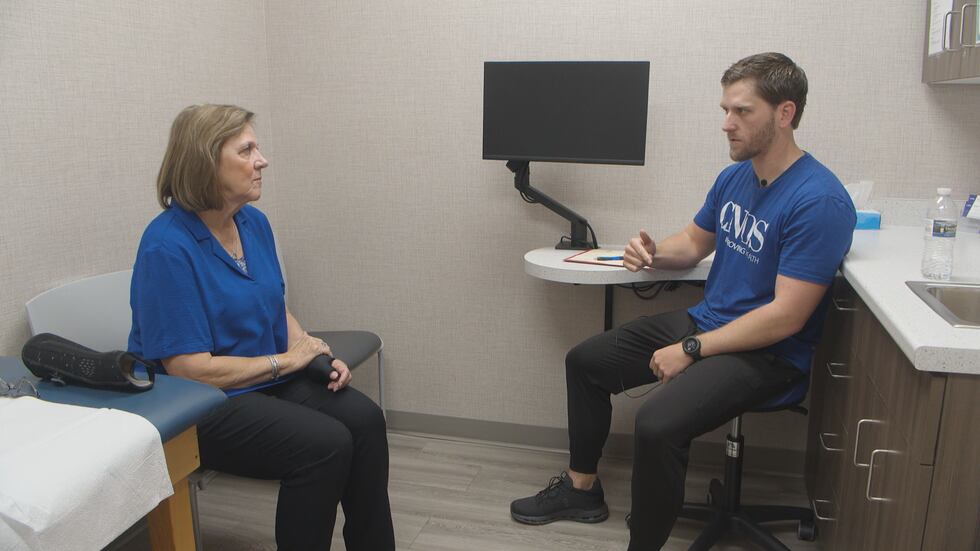
Now, after an international trip and eight weeks later, she’s getting updated X-rays. She’s ready to see if the cast can come off. Allen explained how their visits have gone so far.
“There’s a ton of new bone formation that occurred, even at three to four weeks is when we first saw her back due to her trip,” he said. “But in her case, it healed great. The biggest thing is the range of motion. Obviously, being in a cast for so long, you tend to get a little tight in the tendons. But as time goes on, that range of motion will come back, and the strength will come back even better.”
Bowden has enjoyed her visits to Urgent Care and the way she was cared for. “It’s not just all science, it’s the human side also. I think that as a patient, when you can feel that human side, it makes a difference,” she said.
Across the hall, Joel Kraayenbrink was looking over new X-rays of his patients who were coming in for rechecks as well. Kraayenbrink joined the CNOS team in March this year, eager to help move the clinic forward with a shared vision.
“The patient-centered care has been unparalleled, and it’s been a privilege to be a part of it,” said Kraayenbrink. He had a re-check visit with eight-year-old George, who’s healing from a collarbone fracture.
“He suffered an original injury a little over a week ago, had a collarbone fracture, not a surgical problem, so we try to see those if we can, follow those fractures all the way through,” explained Kraayenbrink. ”Generally, we put you to the top of the list so that we can get him in, get some X-rays, and make sure things are going okay, and then get him back to school.”
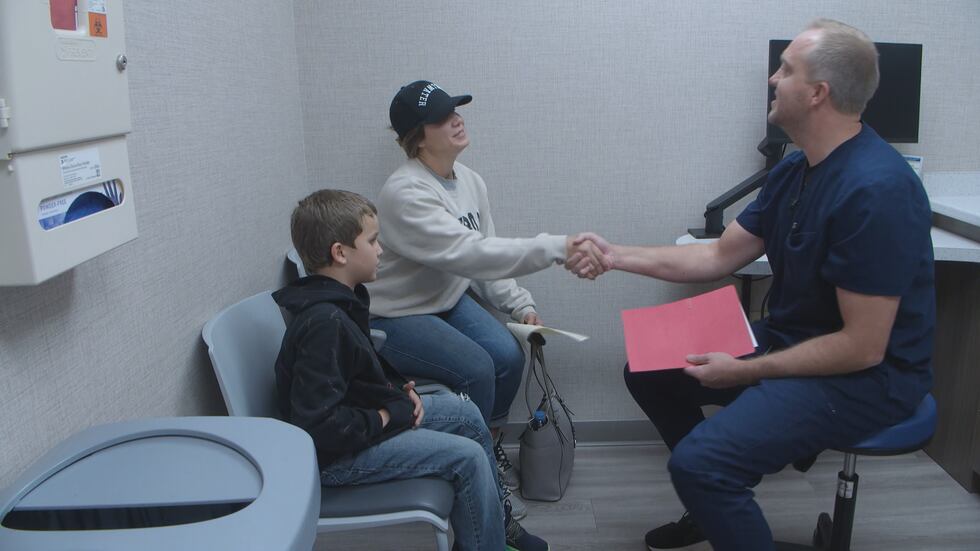
Kraayenbrink says he loves spending time with his patients, helping them tolerate the pain during the healing process. “They’re tolerating their splint cast or sling or otherwise, to make sure that the treatment is going as they hoped it would as well and that all of their needs are being met,” said Kraayenbrink.
Allen said the patient aspect is why he comes to work every day. “You’re helping them get back to recovery, which can take anywhere from a week all the way up to six, seven months,” he said. ”So it’s really gratifying to see their whole process and see them get better, and knowing that you were at the start of it.”
Kraayenbrink likes to help the patient not only on day 1 of their injury, but in the weeks of healing as well.
“We want to make sure that the fracture is healing exactly where we want it to. Sometimes those fractures over time had a little bit of a tendency to what we call ‘fall apart’, meaning they’ll become a little bit more displaced or a little bit more angulated,” he explained. “Sometimes, you have a non-operative fracture turn into an operative fracture. We follow them pretty closely to make sure that doesn’t happen. We also like to make sure that they’re pain controlled, they’re tolerating their splint cast or sling or otherwise, to make sure that the treatment is going as they hoped it would as well and that all of their needs are being met.”
Allen has been with CNOS since 2020. He also loves the patient relationships he builds during visits and follow-ups. “On a daily basis, you’re helping patients in their worst times, and then you’re helping them get back to recovery, which can take anywhere from a week all the way up to six or seven months,” said Allen. “It’s really gratifying to see their whole process and see them get better, and knowing that you were at the start of it.”
This Orthopedic Urgent Care is part of the Imaging Center at the Dakota Dunes Clinic location. It’s open Monday through Friday, 8 a.m. to 4 p.m.(KTIV)